Showing posts with label Music. Show all posts

Monday, 14 November 2011

Background Noise Turns Musical

Sound Recording with the Bayawata Stringband of Balimo

This is not a sound recording lesson. It is just the story of a particular recording session that we did on analogue tape some years back.

I was in Balimo, with a 4 man band called "Bayawata Stringband" in the Western Province of Papua New Guinea. One of the band members had been with my group doing some community organising work along the Aramia River.

When that work was done, we sailed by motorised long canoes back to Balimo Station where I was waiting for my flight back to Daru and Port Moresby. During that last night in Balimo, the boys were playing guitars and I was just listening. I had brought along a cassette tape recorder for the community organising workshop that we had been running the weeks before and it was somewhere in my luggage.

At midnight in Balimo, when the station generator was switched off, the boys went on playing and I thought maybe I would record some of the band's music. I only had one microphone, a Sony Walkman, and a couple of C60 audio cassettes.


Accepting and Using Background Noise Creatively

A "hausboi" in Papua New Guinea is a house used as sleeping quarters for single boys. The hausboi where we were recording is raised on stilts, had thatched walls and roof and at the time had many holes in the floor. So not sound proof but had no echoes either. From within you could hear all the river and lagoon wildlife. Balimo is situated near the Aramia River and there are lots of lagoons around.

Insects can be good when recording a village band at night because, they can provide a particular atmosphere - an outdoor atmosphere. As long as one mikes the main subject properly, the insect noise can remain at a not too distracting level in the recording. My main source of sound was a band of four who all do vocals and they had two acoustic guitars.

Unfortunately, for us there was also a howling dog nearby and a couple of recordings later, that dog decided to howl more and more. My first thought was that maybe I should ask someone to quieten the dog down but listening through the headphones, I felt that the dog was not a great problem at all. So we started to record the next song and much to my delightful surprise, the dog became an integral part of the song as you can listen below.

Sorry I have broken the song down into four parts to protect the Bayawata Band's song from copyright infringement so you have to listen to the development of the musical dog's involvement in four stages.


The Song: "Taim mi liklik mangi"

This is a homage, a song of gratitude and thanks to parents. It talks about growing up with caring parents, and praises their help and care wondering how we as children can ever repay our parents for their great kindness. It is sung in Tok Pisin, one of two creole languages of Papua New Guinea. 

I hope you enjoy this Balimo, "After midnight recording".

Part one, Opening.
Notice the dog's opening howl in the background as the recording starts.


Part two, The Chorus.
Here again the dog adds a few howling touches.


Part three, Lead Break.
The dog's response to the lead break was impeccable. I had to believe that dogs are quite musical at that point in the recording.


Part four, Finale.
By the end of the song, the New Guinea Singing Dog was just about ready to let loose, putting some real soul into his performance.


~~~~~~~~~~~~~~~~~

Equipment Used:

Click the links below to check out these vintage recording instruments.


Recorded on TDK C60 Audio Cassette Tape. 


The sound is as it is from the original analogue tapes - No added effects, filtering or cutting of unwanted frequencies. 

Friday, 11 November 2011

You'll Never Walk Alone


When you walk through a storm
hold your head up high
And don't be afraid of the dark.
At the end of a storm is a golden sky
And the sweet silver song of a lark.
Walk on through the wind,
Walk on through the rain,
Tho' your dreams be tossed and blown.
Walk on, walk on with hope in your heart
And you'll never walk alone,
You'll never, ever walk alone.
Walk on, walk on with hope in your heart
And you'll never walk alone,
You'll never, ever walk alone.

~~~~~~~~~~~~~~~~~

The song, "You'll never, ever walk alone" comes from a 1945 musical called Carousel. You may read more about it at the link in this paragraph but I'd like to have Joss Stone introduce the song for us here. She does it so well. 


What a pity, I wish that Joss Stone would have sung the song through. It is a very inspiring song indeed and in the story of the musical it is sung by a friend to inspire someone in very distressing circumstances.

Over the years, many artists have performed it including notable performances by jazz musician, "Satchmo" Louis Armstrong, The Three Tenors, Righteous Brothers, and gospel singer Mahalia Jackson to name a few.

A version by "The Priests":


This song, "You'll never, ever walk alone" also goes back a long way into the history of Liverpool Football Association whose fans sing the song at every match that liverpool plays. Below is a Liverpool crowd version that seems to date back to 1963 - where Liverpool is playing Everton. You hear the rival clubs sing as the game shifts its fortunes back and forth.


Today perhaps many associate the song with the Liverpool football club as we  are used to hearing it when we are watching a football match in which Liverpool is playing especially in England.

Below is a version by the Norwegian Tenor, Marius Roth Christensen:


And a great version from Jordin Sparks. I really like her version, though I should say that many artists do tend to render it in this way:


And finally an incredible and rousing rock performance of the song by a group that is probably Germany's greatest Punk Rock Band, Die Toten Hosen. Witness this band bring the house down with their rendition of the song. Enjoy..!


In spite of the ample variety of versions of this song, this performance by Mahalia Jackson, known as "The Queen of Gospel", is probably the most moving of all versions, available to the listening public today.

With such incredible, almost haunting performances, Mahalia Jackson, heralded internationally as a singer and civil rights activist; caused entertainer Harry Belafonte to call her "the single most powerful black woman in the United States".

He interpretation of the song below seems to be the most fitting to the spirit and intention of the song. Her vocal touches to the various emotions of the lyrics are as honest and credible as if they did come from a caring soul.

Tuesday, 11 October 2011

Tooraliaditty


Introduction

This is the story of a song.

A song I heard as a child in the late 1960s and early 1970s. But it is a song that made me wonder where Botany Bay was. 

As I was growing up before the Independence of Papua New Guinea, two places in the present day Australia called to my imagination. Melbourne, a place I could see on the map and Botany Bay a magical place in my imagination.

My elder sisters brought the song home and they would sing it at home. I had three elder sisters and I liked being with them as a child when they would start comparing the different songs that they were learning in school.

I used to be transported by that song and I couldn't wait to go to school myself and learn the song first hand. In many ways, I too wanted to be bound for Botany Bay. 

"Botany Bay" was a song that neither "Waltzing Matilda" nor "This Old Man" could rival in my childhood taste for beautiful songs.

By the time I entered prep in 1970, I kept listening out in the various classes to see which teacher was teaching "Botany Bay". But it seems that I had come in to school too late. For suddenly, it seemed that one part of history would be denied to me. After my own school day, which at the time for preps ended at 12 mid day, I would wait around outside various classrooms, listening for the song. But I never heard it in school ever.

The elder children's class rooms especially around the grade four classrooms, in 1970 were singing "This old man" before they would break for lunch. But I kept listening out for Botany Bay.

We must have had some Irish Australian teachers in Rabaul in those days. Because there was another Irish lullaby that I had heard: "Too-ra-loo-ra-loo-ra" 

I never really cared much for the meaning of the words of "Botany Bay" nor did I stop to ponder what must have been the heart breaking conditions that inspired a poet or musician to compose the song.

Today, it can be amazing to wonder: Was this really a song written for entertainment? How could that be, when one human's suffering could be another's pleasure? Yet, when we look at theatrical entertainment over the years, it is such that "Les Miserables" do make for the best figurants or stooges of stage and screen.

But as a child, I was in awe of the song's somehow, liberating refrain. There was something in it that even a child could sense. Something melancholic but something also healing. Something that made even a child go looking. Reaching out. Breathing the air for the meaning of song.

Singing too-ral, li-ooral, li-addity,
Singing too-ral, li-ooral, li-ay,
Singing too-ral, li-ooral, li-addity,
And we're bound for Botany Bay.

I should also explain that "To Ura Lai" in my own language means, two mates or two friends. A familiar term we use to address a brother in law. As inlaws in my culture are addressed in the plural. "Tolai" (my friend) the name my people are known by in PNG, is in fact the singular form of "To Ura Lai" the polite form. It is quite normal for a man in joy or even distress to call out to his "Ura Lai" in various intonations.

Children of my generation, when we were in pain, or if we were punished, or hurt, we would cry out:

"Ooh yau kalalai, yau kalalai titi".

These words have no translatable meaning in the Kuanua language. It is just a long exclamation of a child's fear and anticipation.

Children would chant those lines when they were beaten as was the common practice of the time. As we were called to a beating punishment, we would start chanting that song and sing it as long as we could manage to pronouce it. Then when the pain of the beating became too much, then we would lose the power of speech. We would stop that chanting and switch to "Oui Iau Kamuka, Iau Kamuka", which we would utter at every stroke. Curiously, although this translates to the "Mea Culpa" in latin, we did not shout them to admit guilt. We wanted to speak and prolong the time between strokes. Survival instincts. Children just learnt it from one another and practiced it.

It was almost by a curious onomatopoeic echo, that the song had come to me. Of course I knew it had other meanings but first impressions are first impressions. And in my traditional musical culture there is a whole genre of songs that are called "Li-li". Li-li is synonymous with "song" for which other words in the language are: "kakailai", and "liu" etc.

But as I grew older, I started to realise the meaning of the song. I begain to realise the plight of people who had been sent away from home. And one part of me wanted to know why this was necessary. That's when the song again echoed with traditional myths and legends that I had heard as a child.

So there were some convicts? Some criminals? What kind of criminals? 

  • Poachers - people who were just hunting animals like I am allowed to do in PNG
  • People who destroyed crops - they must have been hungry and they probably took some food from farms
  • Political Protestors - people protesting against low wages

These were criminals?

As I grew older I began to hear "Botany Bay" differently. How could a criminal be so homesick? Why this pain from someone "evil" and condemned?

International Events Leading to Transportation

Although the transportation of convicts to Australia was caused by the American Revolution and War of Independence, which denied Great Britain a previous location of transporting its prisoners, it seems that the main reason for the mass transportation of prisoners to Australia was the looming threat of invasion of Great Britain by the French especially Napoleon, during the time of wars in Europe around 1790.

Perhaps for a protestant monarchy in Great Britain, the threat of a French (Catholic) invasion was too great to face. Any civil unrest at home had to be eliminated efficiently and the best solution that the monarchy could do was to remove any elements of society that might weaken its resolve from within. 

It is not surprising that many of the transported criminals from the gaols and the hulks were of Irish descent. It is said that 9 out of every 10 prisoners in the Irish gaols were catholic. 

As the monarchies in the surrounding countries in Europe prepared for war, a war eventually known as the Napoleonic Wars, and primarily intended to restore the monarchy in France, following the French Revolution, the transportation of rebels, protestors and criminals to Botany Bay became underway before the total outbreak of that particular series of wars.

Botany Bay

Somewhere during that period of constant war in Europe, people found themselves being condemned and transported from their homes and loved ones. It was that traumatic period and condition that gave birth to this song.

Here is "Botany Bay" heard again, this time through the very beautiful voice of Mirusia Louwerse.

Sunday, 9 October 2011

Cold Chisel - Farewell to Steve Prestwich

Tribute to Steve Prestwich. RIP

With the passing of Steve Prestwich in January 2011, I wanted to pay a brief revisit to his band, my most favourite Australian Band, Cold Chisel and to the songs they played which stirred the hearts of workers and ordinary citizens of Australia, New Zealand and even Papua New Guinea. Among other songs, Steve Prestwich wrote the song "When the war is over" which is presented in this tribute.

Part of the tribute seeks to evoke the spirit that gave rise to the song writing of Steve Prestwich and also to Don Walker. We will do that by providing links to the subject and issues that they wrote and sang about.


Band members

Wondering about Cold Chisel's talent and the reason this Australian band broke as they did onto the international scene at the time they did, one has to consider their feat in respect to the moment. Cold Chisel appeared during an era which was actually the beginning of the end of hard working, live, stage performing rock bands. Pre-programmed music was already on the rise and disco music was about to pay its short visit onto the international music scene. It is interesting therefore to see Cold Chisel, whom I consider, the last of the great classical rock bands of the era, make its appearance and stamp its mark on the history of Rock and Roll.

It had great material in its composition of versatile band members, two of whom were great hit writing song writers, an incredibly talented lead guitarist, two great and complementary vocalists and a solid bass guitarist who could support any action. Certainly a keyboard virtuoso like Don Walker, who is also a songwriter, gave himself through his own talent, what every writer needs, a very quick play back about musical ideas and concepts. Then, Cold Chisel also had Steve Prestwich, a drummer who could hear music, conceptualised through various musical backgrounds, beats and temporal situations.

Many people talk of the great all around talent of Ian Moss. But at that exact point in the Rock and Roll and Heavy Metal Scene, it was that phenomenal voice of Jimmy Barnes that could cut across all the multiple frequencies of a live Rock and Roll performance and deliver crystal sobriety and passion. And there is no one alive today who will ever be able to touch the vocal notes that Jimmy Barnes owned with his vocal performances.  


Steve Prestwich is said to have written "When the war is over" in 1981. There is a good description of the song's structure over at Wikipedia which describes how it broke away from traditional song writing culture.

Here is a song, that truly captures a soldier's need to maintain his soul and dignity, in spite of all the destruction that he is made to commit on the face of the earth. This is the most beautiful anthem to a soldiers cry for his own freedom.

A soldiers dream perhaps best summed up in a single line of the whole song: "I got plans for more than a wanted man".

Ian Moss, certainly displayed his own genius when he led this song's performance to the crescendo building moments when the band's usual lead singer Jimmy Barnes starts to break in, and then joins Moss in a wonderful duet ending. One of the greatest songs of all time.

When The War Is Over lyrics: (Presented here in the original structure)


Ain't nobody gonna steal this heart away

When the war is over
Got to get away
Pack my bag to no place
In no time no day
You and I we used each other's shoulder
Still so young but somehow so much older
How can I go home and not get
Blown away

You and I had our sights set
On something
Hope this doesn't mean our days are numbered
I got plans for more than a wanted man
All around this chaos and madness
Can't help feeling nothing more than sadness
Only choice to face it the best I can

When the war is over
Got to start again
Try to hold a trace of what it was
Back then
You and I we sent each other stories
Just a page I'm lost in all its glory
How can I go home and not get blown away

Ain't nobody gonna steal this heart away

Ain't nobody gonna steal this heart away
-----------------------------------------------------------------
Four Walls


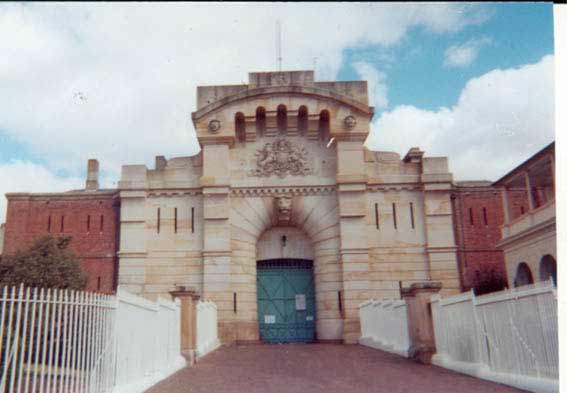
There's a long history of corruption and injustice around the Bathurst Prison and many events that mar its history. We won't go into the history incuding the social protests and police brutality that went on in Australia during the 70s and 80s. But through the lyrics of this song, we can explore some elements that would have fired the writing soul of this, what many consider to be the most successful Australian Rock Band ever. 

Cold Chisel's "Four Walls" may have played a big part in the public demand for the improvement of jail conditions and facilities in Australia.

Four Walls Lyrics: (Song Written by Don Walker)

They're calling time for exercise
The maid'll hose the room out
When I'm gone
I never knew such luxury
Before my verdict fell


And in every congregation
There was silence
You can hear the Angels singin'
When Christmas comes around
Four walls, washbasin, prison bed

I love to march while some Nazi calls the time
Who'd wanna go home

I can't see
I can't hear
They've burnt out all the feeling
I've never been so crazy
And it's just my second year
Four walls, washbasin, prison bed

-----------------------------------------------------------------
Khe Sanh

Many countries including Papua New Guinea, do not take notice of the post traumatic stress disorder suffered by soldiers returning from war. "Khe Sanh through the portrait of a lost and suffering soldier helped to bring this condition to public attention.
Khe Sanh Lyrics: (Song Written by Don Walker)

I left my heart to the sappers round Khe Sanh
And my soul was sold with my cigarettes to the blackmarket man
I've had the Vietnam cold turkey
From the ocean to the Silver City
And it's only other vets could understand

About the long forgotten dockside guarantees
How there were no V-dayheroes in 1973
How we sailed into Sydney Harbour
Saw an old friend but couldn't kiss her
She was lined, and I was home to the lucky land

And she was like so many more from that time on
Their lives were all so empty, till they found their chosen one
And their legs were often open
But their minds were always closed
And their hearts were held in fast suburban chains
And the legal pads were yellow, hours long, paypacket lean
And the telex writers clattered where the gunships once had been
But the car parks made me jumpy
And I never stopped the dreams
Or the growing need for speed and novacaine

So I worked across the country end to end
Tried to find a place to settle down, where my mixed up life could mend
Held a job on an oil-rig
Flying choppers when I could
But the nightlife nearly drove me round the bend

And I've travelled round the world from year to year
And each one found me aimless, one more year the more for wear
And I've been back to South East Asia
But the answer sure ain't there
But I'm drifting north, to check things out again

You know the last plane out of Sydney's almost gone
Only seven flying hours, and I'll be landing in Hong Kong
There ain't nothing like the kisses
From a jaded Chinese princess
I'm gonna hit some Hong Kong mattress all night long

Well the last plane out of Sydney's almost gone
Yeah the last plane out of Sydney's almost gone
And it's really got me worried
I'm goin' nowhere and I'm in a hurry
And the last plane out of Sydney's almost gone

-----------------------------------------------------------------
I was not sure which song to close this blog post with. So many great songs that remind me of growing up as a teen-age fan of Cold Chisel in PNG.

My Baby, Choir Girl, Rising Sun, Saturday Night, Ita, Working Class Man, Cheap wine, The last wave of summer, Forever Now..?

I'll settle today for "Flame Trees". Happy Listening..!


Flame Trees Lyrics
Song Written by Steve Prestwich and Don Walker

Kids out driving Saturday afternoon just pass me by
I'm just savouring familiar sights
We shared some history, this town and I
And I can't stop that long forgotton feeling of her
Time to book a room and stay tonight.


Number one is to find some friends to say "You're doing wel..."
After all this time you boys look just the same."
Number two is the happy hour at one of two hotels,
And settle in to play "Do you remember so and so?".
Number three is never say her name.


Oh the flame trees will blind the weary driver
And there's nothing else could set fire to this town
There's no change, there's no pace,
Everything within its place
Just makes it harder to believe that she won't be around.


But Oh! Who needs that sentimental bullshit, anyway?
You know it takes more than just a memory to make me cry
And I'm happy just to sit here, at a table with old friends
And see which one of us can tell the biggest lies.


And there's a girl, she's falling in love, near where the pianola stands..
With a young local factory auto-worker, just holding hands
And I'm wondering if he'll go or if he'll stay.


Do you remember, nothing stopped us on the field in our day


Oh the flame trees will blind the weary driver
and there's nothing else could set fire to this town.
There's no change, there's no pace,
Everything within its place
Just makes it harder to believe that she won't be around.


Oh the flame trees will blind the weary driver
and there's nothing else could set fire to this town.
There's no change, there's no pace,
Everything within its place
Just makes it harder to believe that she won't be around.

Monday, 4 July 2011

What happened after Mozambique?

In 1978, the late Jean Rouch himself a famous figure in French cinema, and a group of Parisian filmmakers created the Mozambique film workshop which created the first ever indigenous third world filmmakers and film authors.


Today, indigenous and third world filmmakers are still struggling to have their own voice and world view heard on the international forum.


There are still too many people and organisations who believe that the third world people need to be represented by first world filmmakers. But are we really incapable of speaking for ourselves? Are we incapable of representing ourselves and offering our own particular perspective on the way the earth functions? Shouldn't we create, run and control our own film forums that truly empower ourselves as the third world people?
Séverin Blanchet creator of several film workshops in the
third world. 
It is fine to collaborate together with filmmakers from the industrialised countries but we also need third world filmmakers and a third world film industry to be self regulating and to be self driven. 
Vincent Blanchét taught and inspired third world
filmmakers. Member of the original Mozambique
Workshop
What did Jean Rouch stand for? What was the dream that the late Blanchet brothers gave to the third world filmmakers? How did these two men inspire the rise of indigenous filmmaking in Papua New Guinea. How did Papua New Guinean filmmakers pick up and run with that dream?


Most third world film festivals are appendages of the larger first world industries funded by Paris or Brussels. Many international film festivals created in the name of third world people are not run or funded by third world people and many of them are Eurocentric. 


Upon what forum can third world film makers and artists really stand on to carry on a reflection about their own cultural existence and the socio-political and economic challenges that they face and struggle with? 


Today our struggle goes on. As a simple evidence of that, most of the film forums are in the Western Countries and very few festivals are run at the level of our rural communities.
Customary welcome rituals, a normal part of Ânûû-rû âboro Film Festival
That's why today I see that the best third world film festival is the Ânûû-rû âboro film festival in New Caledonia. It is the best third world film festival in the world for me, because it reaches out to the communities. It is not run by a hotel but by the whole Melanesian community of the Province Nord (Northern Province of Kanaky). 


The film screenings take place in the villages, where international filmmakers are hosted by the villagers. So members of rural communities are able to have discussions with the filmmakers about a myriad of local and international issues. This is a festival that recognises what film needs to be in the lives of third world people.


The model of Ânûû-rû âboro is a great way for third world people to organise and go forward with their film festivals. Papua New Guinea as a friend and neighbour of the Kanaky people could very easily adopt the Kanaky way of organising film festivals for Papua New Guinea's own film scene and culture. 


Below is a song by Bob Dylan called Mozambique - from his own dreams inspired by Mozambique. That kind of artistry is great. Because it's a third dimension and not from someone merely using the third world for their own career like many people purporting to support the third world do.


That's my point here. It's not about blocking first world filmmakers from working in the third world, but its about proper recognition of third world aspirations as well.


Outside of fiction and drama filmmaking, first world filmmakers who are involved in Documentary film do not have to shut out the voices of third world filmmakers just so that they themselves can have a socio-political voice regarding the state of the third world. They should be facing the common issues from their own humanity, standing on their own personal politics and they should define that for themselves properly before they start publishing their own observations. That way they can provide the earth with authentic art and not the mere noise making about third world issues which only affect them as consumers.


During many other articles regarding film and emancipation, I shall carry on with a critical analysis about North/South relationships and how the third world voice is constantly silenced or denied through various constructs.


In a follow up post, I will deal with the fine differences between People's Forum Filmmaking (The Spirit of Mozambique) and Visual Anthropology.


--------------------------------------------------------------------------------


Note: There are too many terrible covers of "Mozambique" online. Here is an original performance by Bob Dylan and his own band, not in good quality but an original. Please click here if the embed below doesn't work. It usually takes a while for this video to load.


I like to spend sometime in Mozambique
The sunny sky is aqua blue
And all the couples dancing cheek to cheek
It's very nice to stay a week or two
And maybe fall in love just me and you.


There's a lot of pretty girls in Mozambique
And plenty time for good romance
And everybody likes to stop and speak
To give the special one you seek a chance
Or maybe say hello with just a glance.


Lying next to her by the ocean
Reaching out and touching her hand
Whispering your secret emotion
Magic in a magical land.


And when it's time for leaving Mozambique
To say goodbye to sand and sea
You turn around to take a final peek
And you see why it's so unique to be
Among the lovely people living free
Upon the beach of sunny Mozambique..